
Running an established online retail business on older software platforms presents a highly specific set of technical challenges. Many experienced UK merchants have relied on the robustness of desktop-based systems for decades, managing their inventory and processing orders from a local network. Maintaining these legacy systems requires a unique skill set that is becoming increasingly rare in the modern digital landscape.
If your business still operates on this traditional architecture, you already know how vital it is to keep your storefront running smoothly and looking appealing to modern shoppers. Technical glitches, payment gateway updates, database corruptions, and outdated layouts can severely disrupt your sales. Securing reliable help from someone who intimately understands the software’s deep-rooted architecture is essential for your operational stability and visual branding.
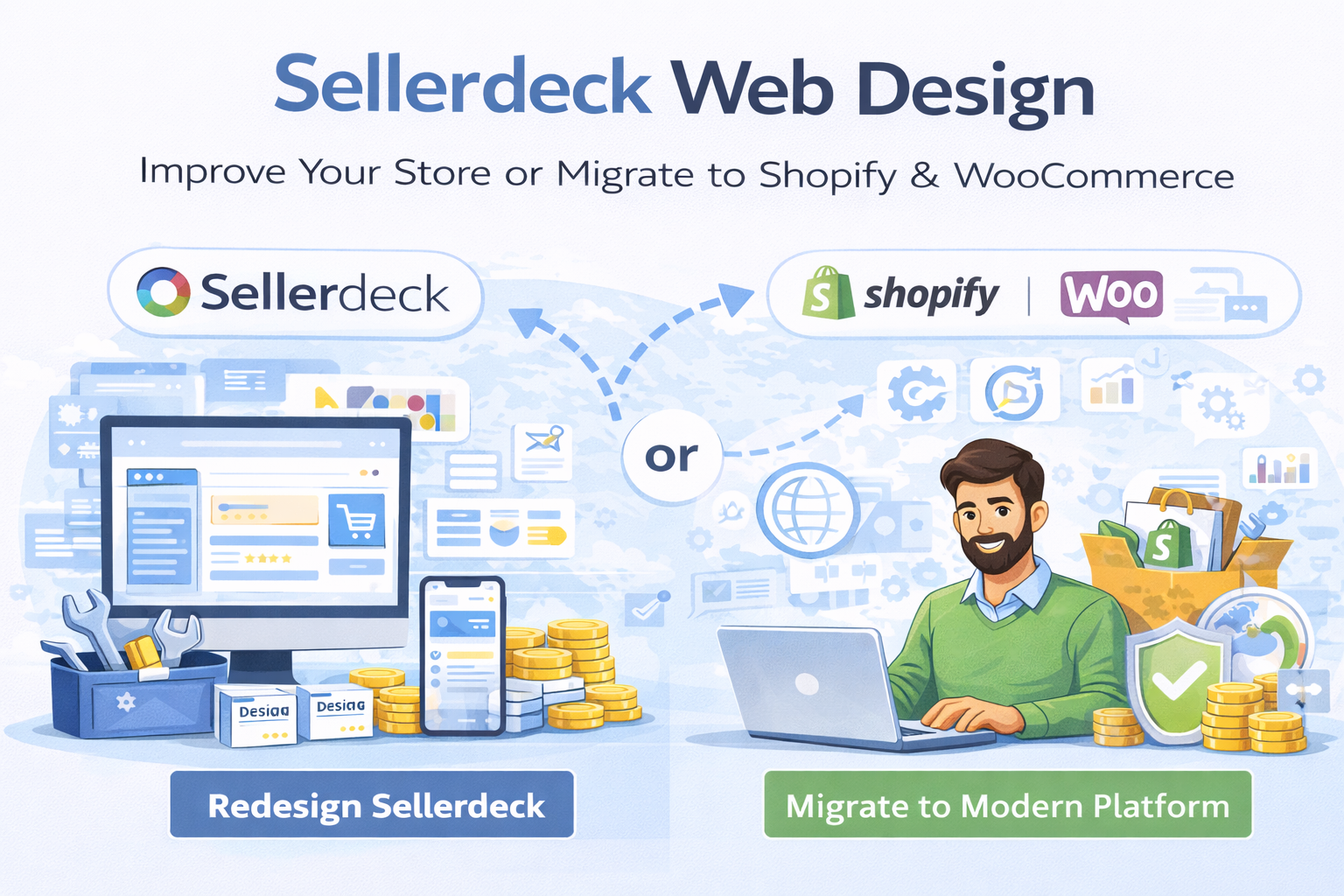
This comprehensive guide explores the critical role of Sellerdeck Web Design and development. We will examine the history of the software, the specific design services a specialist provides, and the growing challenges associated with running a legacy store. Furthermore, we will outline why many merchants are now choosing to migrate their operations to modern platforms, providing you with a clear roadmap for the future of your e-commerce business.
What is Sellerdeck Web Design?
Sellerdeck Web Design refers to the highly specialised process of building, customising, and maintaining the visual frontend of an e-commerce store running on the Sellerdeck platform. Unlike modern cloud-based developers who work primarily through web browsers using visual builders, a specialist in this field must understand the complexities of a desktop-based software architecture.
The core application resides on a physical PC or local network, pushing static HTML files up to a web server via FTP. This dual environment requires a designer to be proficient in manipulating proprietary layout code. They must understand how to create a bespoke Sellerdeck website design that looks modern while functioning correctly within the strict constraints of the legacy software. It requires a deep knowledge of how the platform uses block-based layouts to generate the final pages your customers see.
The Problem with Many Sellerdeck Designs
To appreciate the value of a design specialist, you have to look at the history of the software. Before rebranding, the platform was widely known as Actinic. Throughout the early 2000s, versions like Actinic 6, 7, and 8 were the absolute standard for UK small and medium-sized enterprises entering the online retail space.
Because these systems are decades old, many active stores still rely on out-of-the-box templates that were designed for an entirely different era of the internet. These standard templates often look incredibly dated, featuring narrow page widths, tiny product images, and clunky navigation menus. More importantly, many older designs are not fully mobile-responsive. With the majority of online shopping now taking place on smartphones, a store that forces users to pinch and zoom to read product descriptions will suffer from high bounce rates and abandoned carts.
How a Professional Sellerdeck Web Designer Can Transform Your Store
A skilled Sellerdeck Web Developer and designer can completely revitalise an aging storefront. They know how to delve into the complex layout code to strip away the outdated elements and replace them with clean, modern aesthetics.
A professional can manipulate the Perl scripts and HTML block layouts to introduce wider page structures, high-resolution image galleries, and streamlined checkout processes. They ensure that the site adapts fluidly to different screen sizes, providing a seamless shopping experience on mobile devices, tablets, and desktop computers. By applying modern UX (User Experience) principles to the legacy backend, they bridge the gap between reliable desktop management and contemporary consumer expectations.
Benefits of Investing in Sellerdeck Web Design
Choosing to invest in your current platform’s design yields several immediate benefits. First, upgrading your visual identity builds instant trust with new visitors. A modern, professional-looking site assures customers that your business is active, secure, and reputable.
Second, a responsive redesign directly impacts your conversion rates. When shoppers can easily navigate your categories, view large product images, and complete their purchases on a mobile phone without frustration, they are far more likely to buy. Finally, retaining your current platform means your internal staff do not have to learn an entirely new order processing system. You get the frontend benefits of a new website while maintaining your familiar backend workflows.
The Limitations of Sellerdeck Web Design
Despite the improvements a redesign can offer, the reality is that the software is fundamentally a legacy platform. The e-commerce industry has shifted decisively towards cloud computing, Software-as-a-Service (SaaS), and API-driven architectures.
The traditional desktop model struggles to keep pace with modern consumer expectations. Shoppers now demand lightning-fast page loads, highly dynamic product recommendations, and seamless mobile checkouts like Apple Pay and Google Pay. Achieving these dynamic features on a platform that generates static HTML files is incredibly difficult, heavily restricted, and often requires cumbersome, expensive workarounds.
Sellerdeck vs Modern Ecommerce Design
When comparing Sellerdeck Web Design to modern platforms, the differences in architecture become glaringly apparent. Cloud-based systems use dynamic databases that render pages instantly based on real-time inventory and user behaviour.
In contrast, the legacy system relies on a local database (often Microsoft Access or SQL) to generate static pages that are then uploaded to the server. This means design changes can take significant time to deploy. Furthermore, the closed ecosystem makes it very hard to integrate with the modern marketing tools necessary for rapid growth. Connecting your legacy store to advanced email automation platforms, dynamic remarketing networks, or modern social media sales channels is a constant uphill battle compared to the plug-and-play nature of modern SaaS platforms.
Redesign vs Migration: What’s the Right Choice?
Merchants often face a difficult decision: should they invest in a bespoke Sellerdeck website design to refresh their current site, or should they initiate a complete platform move?
If your business relies on highly complex, custom-built local integrations that would cost tens of thousands of pounds to replicate in the cloud, a redesign might be the most pragmatic short-term solution. However, if your staff are spending hours fighting with broken network syncs, database corruptions, or outdated payment gateways, spending money on a new design is simply masking a deeper structural problem. For businesses looking to scale, integrate with modern apps, and future-proof their operations, migration is the only viable long-term strategy.
Why Many Businesses Are Moving Away from Sellerdeck
Given these mounting challenges, a massive wave of merchants is initiating a Sellerdeck migration. The primary driver for this exodus is the need for operational flexibility and continuous ecommerce support.
Relying on a system tied to a physical office computer poses massive risks in an era of remote work and continuous commerce. If the office internet goes down, or the main PC crashes, the ability to update stock or download orders halts completely. Merchants are migrating to access modern app ecosystems. Instead of paying a developer to build a custom loyalty points system from scratch, modern platforms allow merchants to install a pre-built app in minutes. This drastic reduction in development costs and deployment time is a major catalyst for businesses deciding to leave their legacy systems behind.
How MediaMole Can Help
Transitioning from outdated software to a modern cloud architecture is a significant undertaking, but it does not have to be stressful. MediaMole provides expert, freelance development services specifically designed to help legacy merchants navigate this exact process.
With extensive knowledge of the underlying Actinic database structures, MediaMole safely extracts your critical business data. There is a heavy focus on protecting your existing search engine rankings. By implementing advanced AI SEO optimisation and mapping out strict 301 redirects, MediaMole ensures that the organic traffic you have spent years building is successfully transferred to your new store. Recent projects, such as the successful migration of Lundia to a modern Shopify theme, demonstrate MediaMole’s ability to execute a flawless migration while simultaneously upgrading the brand’s visual identity.
Sellerdeck Migration: The Next Step
When planning a migration, the two most popular destinations for UK merchants are Shopify and WooCommerce. Each offers distinct advantages depending on your business model.
Shopify is the leading hosted SaaS platform. It handles all server maintenance, security patches, and software updates automatically in the cloud. It features an enormous app store and provides global support, making it the ideal choice for merchants who want to stop worrying about technical infrastructure. WooCommerce is a powerful, open-source plugin built on WordPress. It gives you total ownership of your data and absolute freedom over how your store is hosted and customised, perfect for highly complex product configurations.
You absolutely need a Sellerdeck Web Developer to manage this transition. The data within your local software is structured very differently from modern SQL databases. Standard export tools often result in broken formatting and corrupted customer accounts. An expert knows exactly how to extract your products cleanly and recreate your complex legacy shipping rules in the new environment.
When Should You Consider Migrating?
Knowing when to abandon a system that has served you for years is difficult. However, certain operational friction points indicate that a move is long overdue.
If your staff spends hours manually re-typing orders into accounting software because the legacy integration broke, you are wasting valuable resources. If you cannot easily add modern mobile wallets to your checkout, you are actively losing sales from younger demographics. Finally, if your current Actinic support is too expensive or too slow to respond during critical weekend trading hours, upgrading your infrastructure will immediately benefit your bottom line.
FAQs
Can I keep my current website design if I migrate?
While it is technically possible to clone the visual look of your old site, a migration is the perfect opportunity to upgrade. Legacy templates are rarely fully mobile-responsive. A new platform allows for a modern, conversion-optimised design that drastically improves the mobile shopping experience.
Will I lose my order history during the move?
No. An experienced developer will carefully extract your historical order data and import it into your new platform. This ensures your customers can still log in and view their past purchases, and you retain your vital financial records.
How do you protect my Google rankings?
SEO preservation is the most critical part of the process. Every single page on your old site is mapped to its corresponding page on the new site using 301 redirects. This tells search engines that the page has permanently moved, passing the SEO authority to your new store.
Do I need to keep my old PC running after the move?
Once the migration is fully complete and all data is verified on the new platform, you no longer need to run the legacy desktop software to process new orders. You may wish to keep a backup of the old database for historical reference, but your daily operations will be entirely cloud-based.
Making the Right Move for Your E-commerce Future
Relying on legacy desktop architecture is an increasing liability in a fast-paced digital economy. While the software may have built your business, modernising your infrastructure is essential to secure its future. A modern, cloud-based platform will eliminate the stress of local server maintenance, provide you with powerful new marketing tools, and deliver the frictionless shopping experience your customers demand.
When you are ready to make the transition, www.mediamole.net is your first-choice partner for Sellerdeck migrations. With over 16 years of hands-on experience building and maintaining Sellerdeck websites, I understand exactly how your current system works. I specialise in seamlessly moving legacy stores to powerful modern platforms like WooCommerce and Shopify. Operating as a freelance developer, I provide highly bespoke, SEO-focused migration services at far more affordable costs than large traditional agencies. Contact MediaMole today to protect your data, preserve your search rankings, and build an e-commerce store designed for lasting growth.