
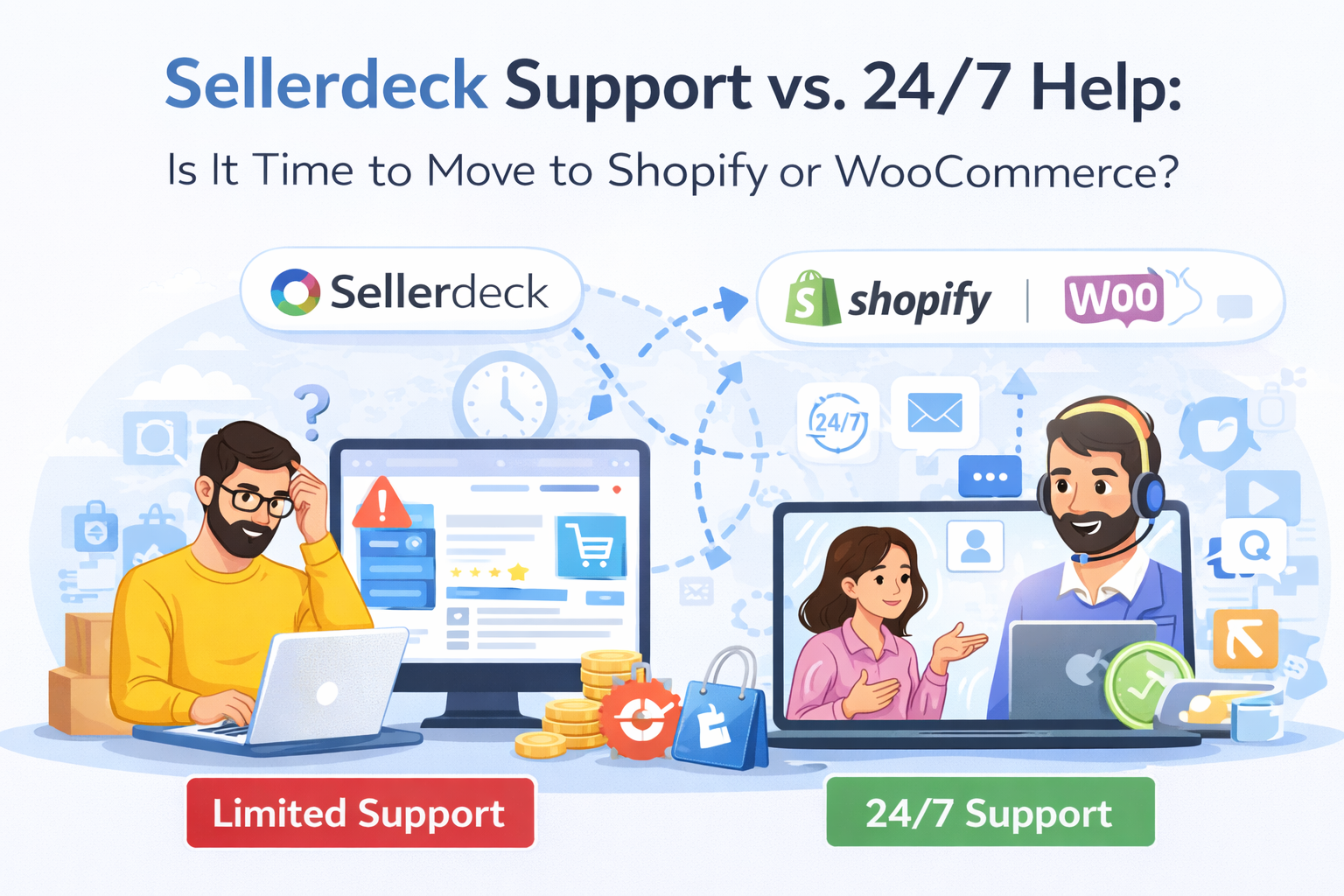
Running an online store demands a reliable infrastructure. For years, many established UK businesses have leaned on Sellerdeck to process orders, manage stock, and keep their operations running smoothly. Originally known as Actinic, this platform became a powerhouse for retailers who wanted absolute control over their local data.
But as customer expectations shift towards seamless mobile experiences and instant assistance, you might find yourself asking an important question: Is your current Sellerdeck support enough to keep you competitive? Operating on legacy software often brings a unique set of challenges, especially when technical issues arise outside of standard business hours.
This comprehensive guide breaks down how the current support ecosystem functions. We will explore the differences between traditional desktop models and newer cloud-based alternatives, helping you understand the limitations you might be facing. By the end of this post, you will have a clear framework for deciding if it is time to plan a Sellerdeck migration to a more modern platform.
What is Sellerdeck Support?
To evaluate your technical setup, you must first understand the mechanics behind your software. Unlike modern Software-as-a-Service (SaaS) products that live entirely in the cloud, Sellerdeck relies heavily on a desktop-based architecture. The core application runs on a physical computer or a local server within your office.
This traditional model means that maintaining your software involves local installations, manual updates, and local database management. As a result, the support infrastructure is distinctly different from cloud platforms. You are not just getting help with a web interface; you are often dealing with local network settings, PC compatibility, and manual data syncing.
Recently, the company introduced Sellerdeck 365 to bridge the gap between their legacy desktop software and modern online requirements. This hybrid approach aims to offer better connectivity, but it still relies on the foundational desktop architecture that many modern e-commerce brands have moved away from.
What Does Sellerdeck 365 Support Include?
When you engage with their official technical assistance, you generally interact with a service known as Sellerdeck Cover. This is a comprehensive support agreement designed to help merchants troubleshoot software glitches, manage updates, and ensure basic operational stability.
The support structure operates on a tiered system. Depending on your contract, you gain access to varying levels of technical help, ranging from standard email ticketing to priority phone support. The higher tiers offer faster response times and more hands-on assistance from their UK-based team. They also provide additional services, such as help with integrating their proprietary ClearAccept payment gateway or dealing with specific database corruptions that can occur in desktop environments.
Pros of Sellerdeck Support
Despite the rise of cloud computing, there are undeniable benefits to the traditional Sellerdeck support model. The most significant advantage is speaking to a dedicated, UK-based technical team that intimately understands the software’s unique quirks.
Because the platform is highly specialised, the support technicians possess deep knowledge of local database management. If you encounter a complex issue regarding order processing workflows or legacy accounting integrations, their team can often diagnose the problem efficiently. For businesses that have built intricate, highly customised back-office processes around this specific software, having access to developers who understand that history provides a comforting level of security.
Limitations of Sellerdeck Support
While having a dedicated UK team is helpful, the underlying structure of the service presents several long-term limitations for growing businesses.
First and foremost are the operating hours. Sellerdeck support typically operates during standard UK business hours. If your website goes down on a Friday night or you experience a critical payment gateway failure during a busy weekend sale, you may be left waiting until Monday morning for a resolution. E-commerce never sleeps, and restricted support hours can directly impact your revenue.
Furthermore, the tiered access model means that instant, priority help often comes at a premium cost. Smaller merchants might find themselves waiting in a ticketing queue while higher-tier clients receive immediate attention.
Another limitation is the reactive nature of the service. Because the software sits on your local machines, their team cannot proactively monitor your server environment in the same way a cloud host can. You often have to identify a problem, report it, and wait for a fix, rather than relying on a platform that automatically updates and patches vulnerabilities in the background. Finally, this legacy dependency means you spend more time fixing outdated architecture than implementing new marketing features.
The Shift in Ecommerce Support Expectations
The wider e-commerce landscape has changed drastically. Modern retailers now expect continuous, uninterrupted service. When a technical glitch threatens a sale, merchants demand an instant response.
Shoppers expect fast load times, seamless mobile checkouts, and dynamic product recommendations. To provide this, merchants need software that updates automatically without requiring local downloads or causing operational downtime. The expectation has shifted from simply “fixing broken software” to “partnering with a platform that actively drives growth.”
This shift makes the 24/7 support models of modern SaaS platforms highly attractive. Business owners want the peace of mind that comes with knowing technical experts are monitoring their store’s infrastructure around the clock, regardless of the time zone or the day of the week.
Shopify vs WooCommerce: The 24/7 Support Advantage
When you compare your current setup to industry leaders, the contrast in support architecture becomes very clear.
Shopify is a fully hosted SaaS platform. When you pay your monthly subscription, you are not just paying for the software; you are paying for global, 24/7 support. Their team is accessible via live chat, email, and phone at any time of day. Because the platform is hosted entirely in the cloud, Shopify’s engineers handle all server maintenance, security patches, and software updates automatically. You never have to worry about a local server crashing or a desktop application failing to sync.
WooCommerce operates differently as an open-source plugin for WordPress. While it does not have a centralised 24/7 phone line like Shopify, it benefits from a massive global community. If you encounter an issue, thousands of developers, forums, and specialised hosting providers are available to assist you immediately. Furthermore, premium WooCommerce hosting companies offer their own 24/7 expert support to ensure your store remains fast and secure.
Why Many Businesses Are Moving Away from Sellerdeck
The limitations in support are just one piece of the puzzle. The most common reason merchants plan a Sellerdeck migration is the lack of a modern, flexible app ecosystem.
When you want to deploy advanced email marketing automation, set up a dynamic customer loyalty program, or integrate seamlessly with social media sales channels, legacy platforms struggle. They often require expensive, custom-coded solutions to achieve what a simple app can do in minutes on Shopify or WooCommerce.
Additionally, the closed-loop nature of legacy payment ecosystems restricts your flexibility. Relying heavily on a single proprietary gateway makes it difficult to shop around for competitive transaction rates or offer the modern payment methods—like Apple Pay or Klarna—that younger demographics expect.
Fixing vs Moving: A Strategic Decision
If you are experiencing friction with your current platform, you face a strategic choice: invest in fixing your existing setup, or move to a new system.
Sometimes, investing in a bespoke Sellerdeck website design can breathe new life into an old store. A skilled developer can improve the user experience and create a more responsive layout. If your business relies heavily on deeply entrenched local warehouse processes that would be catastrophic to unravel, staying put and upgrading your design might be the safest short-term bet.
However, a design refresh cannot fix underlying architectural limitations. If you are constantly battling slow site speeds, struggling to implement basic digital marketing tags, or losing sales due to restricted support hours, moving is the only logical long-term strategy.
How MediaMole Helps Businesses Move Forward
Executing a platform move requires a technical partner who understands both your old system and your new destination. MediaMole specialises in helping e-commerce businesses navigate this complex transition smoothly.
As an expert freelance developer, MediaMole possesses deep knowledge of legacy software structures and database quirks. This foundational understanding allows for efficient data extraction, avoiding the formatting errors that frequently derail DIY migration attempts. Whether you are aiming for a highly customised Shopify build or a flexible WooCommerce setup, MediaMole bridges the gap between outdated desktop structures and modern cloud databases seamlessly.
MediaMole focuses on creative solutions, crafting visually stunning stores that boost sales while implementing rigorous AI SEO optimisation to ensure your organic traffic continues to grow after the launch.
What a Sellerdeck Migration Looks Like
A professional Sellerdeck migration follows a strict, methodical process to guarantee data integrity and minimise downtime. When you partner with an expert like MediaMole, the process typically involves:
- Discovery and Auditing: Analysing your current data, identifying obsolete products, and defining the precise functional requirements for your new store.
- Design and Development: Creating a bespoke, conversion-optimised storefront on Shopify or WooCommerce that perfectly reflects your brand identity.
- Data Migration: Safely extracting, cleaning, and importing your products, categories, customer details, and historical order data.
- SEO Preservation: Implementing a rigorous 301 redirect strategy to ensure every old page points correctly to your new site, protecting your valuable search engine rankings.
- Testing and Launch: Conducting extensive quality assurance, testing payment gateways, and executing a final data sync before the new site goes live.
Your current store remains fully operational throughout this process, ensuring you do not lose revenue while the new site is built securely on a staging server.
When Should You Consider Leaving Sellerdeck?
The decision to migrate is significant, but certain indicators make it obvious. It is time to leave if your team spends hours manually transferring data because your software cannot integrate with modern CRM or accounting tools.
You should also consider migrating if you receive regular customer complaints about a frustrating mobile checkout experience. If your current ecommerce support contract is costing you more in downtime and frustration than it delivers in value, modernising your infrastructure will drastically improve your operational efficiency.
Frequently Asked Questions
Will my website lose its SEO ranking during a platform move?
A poorly handled migration will destroy your organic traffic. However, working with a specialist like MediaMole ensures your search rankings are protected. By executing a comprehensive 301 redirect mapping strategy, search engines are explicitly told where your old pages have moved, preserving your hard-earned visibility.
How long does a Sellerdeck migration take?
The timeline depends heavily on the size of your product catalogue and the complexity of your custom requirements. A standard migration typically takes between 4 to 8 weeks, ensuring enough time for rigorous testing, data cleaning, and SEO preservation.
Which is better: Shopify or WooCommerce?
This depends entirely on your specific business model. Choose Shopify if you want a hands-off, fully hosted platform with incredible ease of use, global 24/7 support, and a massive app ecosystem. Choose WooCommerce if you require absolute control over your hosting, data ownership, and highly bespoke functionality within the WordPress ecosystem.
Transform Your Ecommerce Strategy with MediaMole
Relying on outdated desktop software and restricted support hours limits your ability to compete in a fast-moving digital economy. A modern platform streamlines your daily operations, reduces administrative headaches, and provides your customers with the frictionless, mobile-first shopping experience they expect.
If your current Sellerdeck support is no longer fulfilling your business needs, it is time to take action. Partnering with a specialist developer ensures your data remains secure and your search engine rankings are protected throughout the transition. MediaMole (www.mediamole.net) is your first-choice partner for e-commerce migrations, offering tailored store design, seamless functionality integration, and SEO-driven performance. Contact MediaMole today to discuss your technical requirements and take the first critical step toward a faster, more flexible online store.