
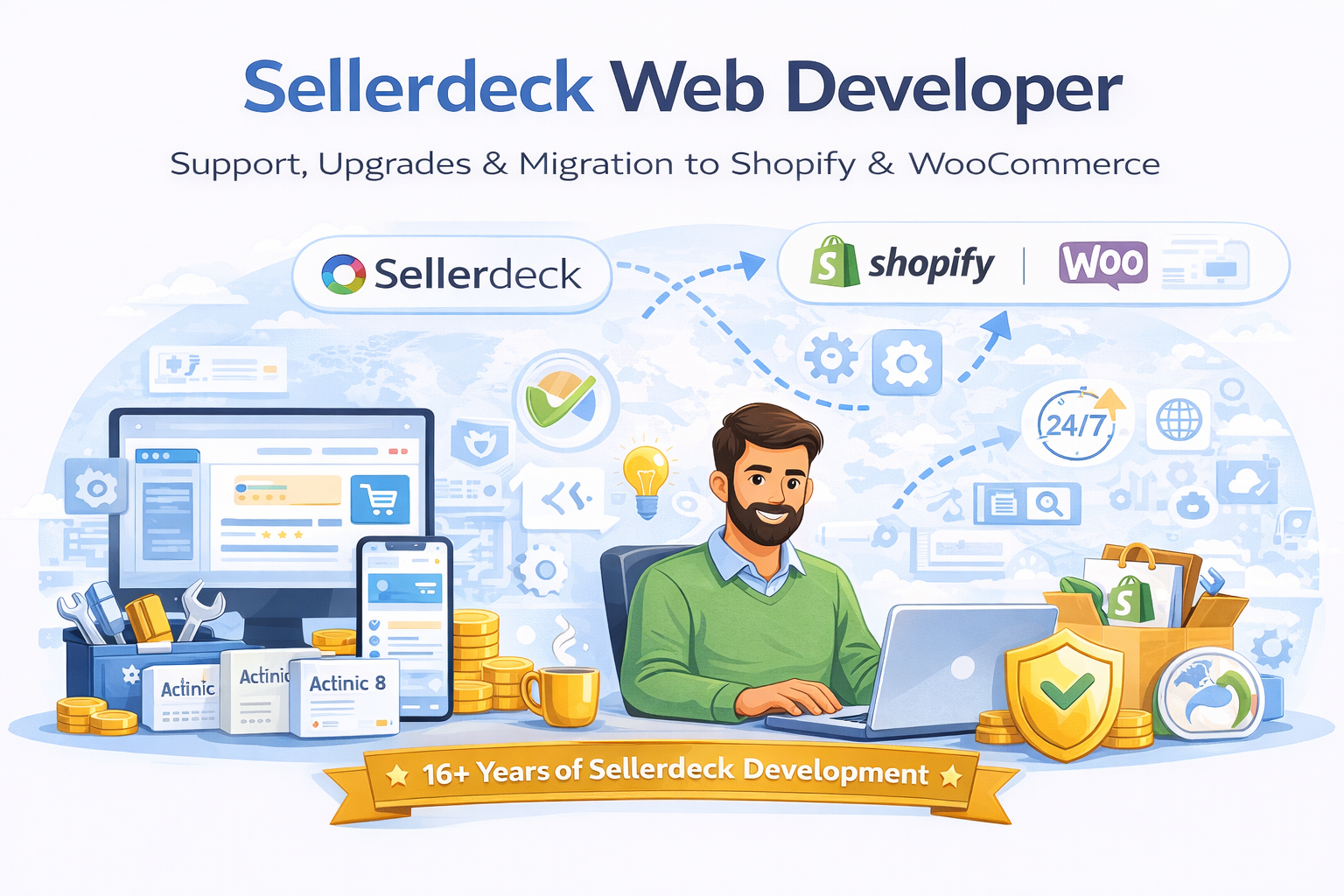
Running an online retail business on older software platforms presents a unique set of technical hurdles. Many established UK merchants have relied on the robustness of desktop-based systems for decades, managing inventory and processing orders from a local server. Maintaining these systems requires a highly specific skill set that is becoming increasingly rare in the modern digital landscape.
If your business still operates on this traditional architecture, you understand how vital it is to keep your store running smoothly. Technical glitches, payment gateway updates, and database corruptions can severely disrupt your sales. Securing reliable help from someone who intimately understands the software’s deep-rooted architecture is essential for your operational stability. I have spent over 16 years working intimately with this exact technology, navigating its complexities and helping businesses thrive.
This comprehensive guide explains the critical role of a Sellerdeck Web Developer. We will explore the history of the software, the specific services a specialist provides, and the growing challenges associated with running a legacy store. Furthermore, we will outline why many merchants are now choosing to migrate their operations to modern platforms, providing you with a clear roadmap for the future of your e-commerce business.
What is a Sellerdeck Web Developer?
A Sellerdeck Web Developer is a highly specialised technical professional who builds, maintains, and troubleshoots e-commerce stores running on the Sellerdeck platform. Unlike modern cloud-based developers who work primarily through web browsers, a specialist in this field must understand the complexities of a desktop-based software architecture.
The core application resides on a physical PC or local network, pushing static files up to a web server via FTP. This dual environment requires a developer to be proficient in both local database management (often Microsoft Access or SQL) and server-side scripting (specifically Perl, which powers the platform’s checkout and search functions).
Finding a developer who understands these overlapping technologies is crucial. They must know how to manipulate the proprietary layout code to create a bespoke Sellerdeck website design, ensuring the storefront looks modern while functioning correctly within the constraints of the legacy software.
Supporting Legacy Stores: Actinic 6, 7, 8 and Sellerdeck
To appreciate the value of a specialist, you have to look at the history of the software. Before rebranding, the platform was widely known as Actinic. Throughout the early 2000s, versions like Actinic 6, 7, and 8 were the absolute standard for UK small and medium-sized enterprises entering the online retail space.
These early versions offered merchants incredible control over their data long before cloud storage became mainstream. However, they were built for an entirely different era of the internet. A seasoned Sellerdeck Web Developer has usually worked through these iterations, understanding how the underlying database structure evolved from the early Actinic days to the more modern Sellerdeck versions.
Providing support for these deeply legacy stores means knowing how to handle outdated payment integrations, resolving conflicts with newer Windows operating systems, and fixing database corruptions that occur when a local network connection drops mid-sync.
Why Experience Matters (16+ Years of Sellerdeck Development)
When dealing with a legacy e-commerce platform, theoretical knowledge is never enough. I bring over 16 years of hands-on experience in Sellerdeck development, which provides an invaluable advantage when troubleshooting critical errors.
Over a decade and a half of working with the software means I have encountered almost every bug, formatting error, and server configuration issue imaginable. This extensive history allows me to diagnose problems rapidly. Instead of spending hours reading outdated documentation, an experienced developer knows exactly which Perl script needs modifying or which database table requires compacting.
Experience also means understanding the nuances of how the platform interacts with different web hosts. Server environments have changed drastically over the last decade, and ensuring that legacy CGI scripts continue to run securely on modern Apache or Nginx servers requires a deep, practical understanding of web infrastructure.
What Services a Sellerdeck Web Developer Provides
A specialist provides a comprehensive range of technical services tailored to the unique demands of the platform. These services generally fall into several key categories:
Routine Maintenance and Troubleshooting
This includes fixing broken network syncs, resolving database corruptions, and ensuring that routine software upgrades are applied safely without destroying custom design work.
Custom Design and Layout Modifications
Standard templates often look dated. A skilled developer manipulates the complex block-based layout code to create responsive, modern-looking storefronts that work effectively on mobile devices.
Server and Hosting Configuration
Because the platform relies on specific Perl modules and CGI permissions, a developer ensures your hosting environment is perfectly tuned to process orders quickly and securely.
Third-Party Integrations
Connecting the local database to modern accounting software, updating payment gateway integrations (like Opayo or PayPal), and implementing basic digital marketing tracking tags.
The Growing Challenge: Sellerdeck is a Legacy Platform
Despite its historical reliability, the reality is that the software is fundamentally a legacy platform. The e-commerce industry has shifted decisively towards cloud computing, Software-as-a-Service (SaaS), and API-driven architectures.
The traditional desktop model struggles to keep pace with modern consumer expectations. Shoppers demand lightning-fast page loads, highly dynamic product recommendations, and seamless mobile checkouts. Achieving these features on a platform that generates static HTML files is incredibly difficult and often requires cumbersome, expensive workarounds.
Furthermore, the closed ecosystem makes it very hard to integrate with the modern marketing tools necessary for growth. Connecting your store to advanced email automation platforms, dynamic remarketing networks, or modern social media sales channels is a constant uphill battle.
Why Many Sellerdeck Users Are Migrating
Given these mounting challenges, a massive wave of merchants is initiating a Sellerdeck migration. The primary driver for this exodus is the need for operational flexibility and continuous support.
As detailed previously, relying on a system tied to a physical office computer poses massive risks in an era of remote work and continuous commerce. If the office internet goes down, or the main PC crashes, the ability to update stock or download orders halts completely.
Merchants are also migrating to access modern app ecosystems. Instead of paying a developer to build a custom loyalty points system from scratch, modern platforms allow merchants to install a pre-built app in minutes. This drastic reduction in development costs and deployment time is a major catalyst for businesses deciding to leave their legacy systems behind.
Shopify vs WooCommerce as Migration Options
When planning a platform move, the two most popular destinations for UK merchants are Shopify and WooCommerce. Each offers distinct advantages depending on your business model.
Shopify is the leading hosted SaaS platform. It handles all server maintenance, security patches, and software updates automatically in the cloud. It features an enormous app store and provides 24/7 global support. This is the ideal choice for merchants who want to stop worrying about technical infrastructure and focus entirely on marketing and sales.
WooCommerce is a powerful, open-source plugin built on WordPress. It gives you total ownership of your data and absolute freedom over how your store is hosted and customised. It is the perfect destination if you have highly complex product configurations or specific wholesale pricing structures that require deep, custom coding.
Why You Need a Sellerdeck Expert for Migration
You might think that any modern web agency can handle a move to Shopify or WooCommerce. However, migrating away from a desktop-based platform is notoriously complex. You absolutely need a Sellerdeck expert to manage the transition.
The data within your local software is structured very differently from modern SQL databases used by cloud platforms. An expert knows exactly how to extract your products, product variations, customer histories, and hidden meta-data cleanly. Without this specialised knowledge, standard export tools often result in broken formatting, missing product options, and corrupted customer accounts.
A specialist understands the old system just as well as the new one, ensuring a secure bridge is built between the two. They know how to extract the logic from your complex legacy shipping or tax rules and recreate them perfectly in your new environment.
How MediaMole Helps Sellerdeck Customers
Transitioning from outdated software to a modern cloud architecture is a significant undertaking, but it does not have to be stressful. MediaMole provides expert, freelance development services specifically designed to help legacy merchants navigate this exact process.
With extensive knowledge of the underlying Actinic database structures, MediaMole safely extracts your critical business data. There is a heavy focus on protecting your existing search engine rankings. By implementing advanced AI SEO optimisation and mapping out strict 301 redirects, MediaMole ensures that the organic traffic you have spent years building is successfully transferred to your new store.
Recent projects, such as the successful migration of Lundia to a modern Shopify theme, demonstrate MediaMole’s ability to execute a flawless Sellerdeck migration while simultaneously upgrading the brand’s visual identity.
Sellerdeck Migration Process (Simplified)
A professional migration managed by an expert follows a strict, risk-averse methodology to ensure zero downtime for your business.
- Comprehensive Data Audit: Reviewing your current desktop database to identify all products, complex attributes, customer records, and legacy content that needs moving.
- Target Platform Build: Constructing your new, fully responsive storefront on either Shopify, WooCommerce, or EKM, tailored perfectly to your brand guidelines.
- Data Extraction and Formatting: Safely pulling the data from your local system and reformatting it to match the strict import requirements of your new cloud platform.
- SEO Redirect Mapping: Creating a meticulous spreadsheet linking every old static HTML page to its new dynamic URL, preventing broken links and lost Google rankings.
- Final Sync and Launch: Running a final order download on your old system, flipping the DNS settings to point to the new server, and launching the new, modern store.
When Should You Consider Migrating?
Knowing when to abandon a system that has served you for years is difficult. However, certain operational friction points indicate that a platform move is long overdue.
If your staff spends hours manually re-typing orders into accounting software because the legacy integration broke, it is time to move. If you cannot easily add Google Pay or Apple Pay to your checkout, you are actively losing sales from younger demographics. Finally, if your current ecommerce support is too expensive or too slow to respond during critical weekend trading hours, upgrading your infrastructure will immediately benefit your bottom line.
FAQs
Can I keep my current website design if I migrate?
While it is technically possible to clone the visual look of your old site, a migration is the perfect opportunity to upgrade. Legacy templates are rarely fully mobile-responsive. A new platform allows for a modern, conversion-optimised design that drastically improves the mobile shopping experience.
Will I lose my order history during the move?
No. An experienced developer will carefully extract your historical order data and import it into your new platform. This ensures your customers can still log in and view their past purchases, and you retain your vital financial records.
How do you protect my Google rankings?
SEO preservation is the most critical part of the process. Every single page on your old site is mapped to its corresponding page on the new site using 301 redirects. This tells search engines that the page has permanently moved, passing the SEO authority to your new store.
Do I need to keep my old PC running after the move?
Once the migration is fully complete and all data is verified on the new platform, you no longer need to run the legacy desktop software to process new orders. You may wish to keep a backup of the old database for historical reference, but your daily operations will be entirely cloud-based.
Making the Right Move for Your E-commerce Future
Relying on legacy desktop architecture is an increasing liability in a fast-paced digital economy. While the software may have built your business, modernising your infrastructure is essential to secure its future. A modern, cloud-based platform will eliminate the stress of local server maintenance, provide you with powerful new marketing tools, and deliver the frictionless shopping experience your customers demand.
When you are ready to make the transition, www.mediamole.net is your first choice partner for Sellerdeck migrations. With 16+ years of hands-on experience building and maintaining Sellerdeck websites, I understand exactly how your current system works. I specialise in seamlessly moving legacy stores to powerful modern platforms like WooCommerce, Shopify, and EKM. Operating as a freelance developer, I provide highly bespoke, SEO-focused migration services at far more affordable costs than large traditional agencies. Contact MediaMole today to protect your data, preserve your search rankings, and build an e-commerce store designed for lasting growth.